






The Serb Movement
Until 1439, Serbia
was an ally of Hungary, regarded also as a “buffer
State” and its ruler Despot Stefan Lazareviç concluded an
alliance with Hungary, obtaining resources that -for a while-
successfully defended Belgrade. In 1439 however a spirited
Ottoman offensive defeated Serbia and its ruler, Djuradj
Brankoviç fled to Hungary. Thousands of his compatriots followed
and settled along the Sava river and between the Sava and the
Danube. After the Turkish exodus in the 17th century, most of
their descendants stayed, forming an identifiable populace with
its own language, culture, Cyrillic alphabet and religion.
Preceded by a Serbian delegation to Pozsony (April 8), led by Djorde
Stratimiroviç, satisfaction was expressed with the Diet’s intent
to free the peasants from Serfdom.
Stratimiroviç,
however, decided to go further and suggested that areas with Serb
population be allowed to secede and join with Serbia. This went
beyond the Diet’s objectives and Kossuth replied: In that case
let the sword decide between us. Many of the Serbs lived within the Southern Border District . Having retaken Hungary from the Ottoman Empire, such Districts had been formed along the Southern and along part of the Eastern borders. They included a network of fortifications, manned by militia-type units largely from the local populace. Thus Serbs, Croats, were widely used in these formations, giving them armed capabilities.
Serbian peasants
revolted and proceeded to kill Hungarians, Germans in the area of
Nagykikinda. While this revolt was quashed, Metropolitan
Rajaçiç called a
“Serbian National Assembly” in Karlócz, which demanded
joining Croats in territorial autonomy under Austrian rule.
The Serbs of Hungary were largely immigrants escaping the Turkish thrust in
the 16th and 17th centuries, settling mostly in Southern Hungary. They had
practiced religious autonomy while suspicious of “magyarization”. Their leaders,
including Metropolitan Rajacic (Rayachich), had supported the Hungarian
independence movement, indeed accompanied the Diet delegation to Vienna.
Endorsing the emancipation of the serfs, in a series of assemblies they demanded
political autonomy, official use of the Serbian language : parallel to what
Hungarians claimed from the crown.,
| Josip Rajacic |
As these demands were gradually
refused, they had taken matters in their own hands. Metropolitan Rajacic was
declared”Patriarch of all the Slavs, Serbs and Vlachs” * Colonel of the border
guards Stevan Supljikac proclaimed “Vojvoda” (i.e. regent) of a newly designated
Serbian province (curiously both Supljikac and his Hungarian rival Mészáros were
at the time in Italy fighting for the Habsburg empire).
The subsequent
“Karloca congress” declared loyalty to the crown (but not Hungary), and a
readiness to ally with Croatia-Slavonia as well as Dalmatia. Upon visiting
Ferdinand V in Innsbruck, however, under Rajacic’s leadership, their plan was
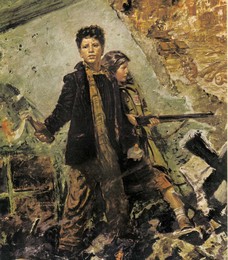
turned down.In Southern Hungary, a Serb rebellion broke out. They were led by a lieutenant from the Hungarian National guard. Palatine Stephen ordered regular imperial army units as well as the National Guard to put down the rebellion, but suffered initial defeats. While the Serbs were helped by units from the neighboring Serbian principality, they also included men and officers from regular Habsburg army units, who professed to fight for the emperor. Trying to differentiate between adversaries became a problem, as the imperial flags were used by both in addition to the banner of the Serb principality. The melee provided an excuse for looting and burning of Hungarian villages, which in turn encouraged reprisals. The revolt in fact went on for almost a year, in spite of repeated efforts to extinguish it.
* : The Vlachs (a.k.a. Wallachs) were also immigrants mostly from the Balkan
to Southern Hungary andTransylvania. Their first groups started to appear in
Hungarian territory in the 13th century. The Vlachs (or Wallachs) later changed
their name and became known as Romanians.
Until 1439, Serbia
was an ally of Hungary, regarded also as a “buffer
State” and its ruler Despot Stefan Lazareviç concluded an
alliance with Hungary, obtaining resources that -for a while-
successfully defended Belgrade. In 1439 however a spirited
Ottoman offensive defeated Serbia and its ruler, Djuradj
Brankoviç fled to Hungary. Thousands of his compatriots followed
and settled along the Sava river and between the Sava and the
Danube. After the Turkish exodus in the 17th century, most of
their descendants stayed, forming an identifiable populace with
its own language, culture, Cyrillic alphabet and religion.
Preceded by a Serbian delegation to Pozsony (April 8), led by Djorde
Stratimiroviç, satisfaction was expressed with the Diet’s intent
to free the peasants from Serfdom.
Stratimiroviç,
however, decided to go further and suggested that areas with Serb
population be allowed to secede and join with Serbia. This went
beyond the Diet’s objectives and Kossuth replied: In that case
let the sword decide between us. Many of the Serbs lived within the Southern Border District . Having retaken Hungary from the Ottoman Empire, such Districts had been formed along the Southern and along part of the Eastern borders. They included a network of fortifications, manned by militia-type units largely from the local populace. Thus Serbs, Croats, were widely used in these formations, giving them armed capabilities.
Serbian peasants
revolted and proceeded to kill Hungarians, Germans in the area of
Nagykikinda. While this revolt was quashed,
in Karlócz, which demanded
joining Croats in territorial autonomy under Austrian rule Metropolitan
Rajaçiç called called it a “serbian National Assembly”
| Serbian militia |
Back to Milestones of 1848-49
