





Mindszenty escaped from captivity Many people gathered around him intending to form a Christian-oriented government. In his statements the cardinal refrained from urging the dismantling of national unity, but he drew a line between Imre Nagy's trend and himself of all the factors, though, the Soviet leadership's behaviour had the greatest influence on the situation. On 31st October and 1st November there were increasing signs of a change in Moscow's attitude which forewarned another armed intervention. Imre Nagy was placed in a tragic situation. People demanded that Soviet troops be pulled out of Hungary, calling for neutrality and a multi-party system. Imre Nagy wanted the same, but he thought it should happen gradually over several years. The Soviets, on the other hand, wanted Imre Nagy to consolidate the Hungarian situation according to their point of view.
The prime minister faced a historic decision… and chose to accept what the people wanted. His decision about leaving the Warsaw Pact and declaring neutrality were practical answers to Soviet intervention. And thus with this move Imre Nagy turned against the interests and dogmas of his own communist party and of the international communist movement led by the Soviets. He had clearly identified himself with the claims of the nation.
In the last days of the revolution his declaration of neutrality and withdrawal from the Warsaw Pact obviously contributed to domestic peace. Workers' councils in Budapest called for an end to strikes and the strongest provincial centres assured the Nagy government of their support. Public order was virtually restored and a beginning was made to clean up the ruins. The composition of the cabinet changed, too. Social Democrats were represented by Anna Kéthly, Gyula Kelemen and József Fischer, and the Petöfi (National Peasant) Party by István Bibó and Ferenc B. Farkas. Pál Maléter was appointed Minister of Defence.
In the meantime the revolution's leadership was split: on 1st November János Kádár went to the Soviet embassy before leaving for Moscow where, after long discussions, he agreed to form a counter-government. The Kádár government rose to power opposing the revolution and backed by Soviet bayonets on 4th November.
On 3rd November Soviet army generals opened negotiations about withdrawing their troops, but the talks were a ruse to mislead the other party. The Hungarian delegation led by Pál Maléter, was trapped and arrested in the Soviet military headquarters in Tököl.
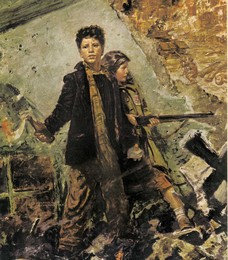
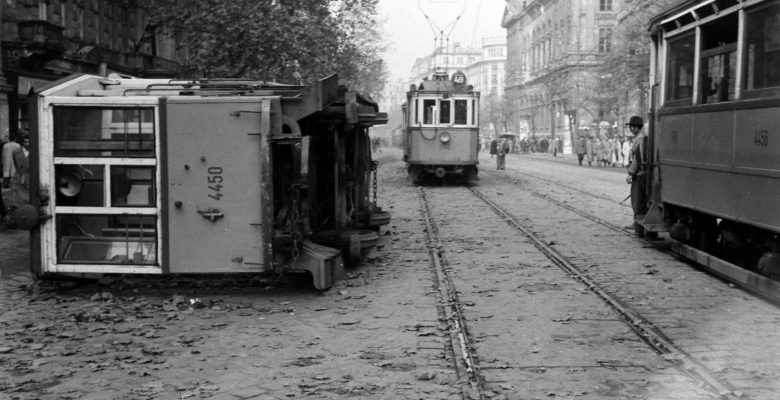
Early in the morning of 4th November the Soviet Army started a ferocious attack on Budapest and within a few days destroyed the resistance of rebels who had defended themselves heroically. Imre Nagy announced the attack in a short radio statement before seeking asylum at the Yugoslav embassy. The political strike and sporadic rear-guard actions went on until the beginning of 1957, but they could not change the fact: the Hungarian revolution had failed.
 Mondák
 Vicc
 Költő / Író
 Népdal
