





Last modified:
 |
|
|
 |
|
 |
|
|
|
|
|
|
|
 |
A “Magyar Folklór” abból a célbol jött létre, hogy tevékeny módon támogassa a magyar folklórt gondolatcsere, tapasztalatcsere és ötletcsere révén.
“FOLKLÓR” is to actively perpetuate Hungarian folklore by exchanging thoughts, experiencés, and ideas.
Hungarian FOLKLOR list, is a mixed language, English & Magyar,
online-resource.
Hungarian FOLKLOR objectives:
· Increase exposure of the Hungarian Traditional Culture (HTC);
· Offer “on-line” planning, organizing, & disseminating of HTC events;
· Strengthen & facilitate a world-wide internet HTC community;
· Invite constructive discussions on HTC related topics;
· Promote & advance HTC world-wide.
FOLKLOR célkitüzések:
· A Magyar Népi Hagyományok (MNH) ismertetése, leirása;
· A MNH -hoz kötött események tervezése, megszervezése és közzététele megsegítése az interneten;
· A MNH iránt érdeklődők internet közösségének erősítése és fejlesztése;
· A MNH -hoz kötött témák konstruktiv diszkutálása;
· A MNH promótálása világszerte.
A Brief History of the Hungarian TÁNCHÁZ Movement
Urban folk musicians soon discovered that there were other remote villages where the TÁNCHÁZ traditions was alive. Each region of Hungary had its own particular style of music and dance, and today many of the regions of Hungary have been studied and their playing styles, dance steps and improvisations are enjoyed and preserved in the TÁNCHÁZes of the cities.
(from program of Bartok Folkdance Studio and Ujstilus’s premiere performance at Kresge Auditorium, M.I.T.)
|
|
|
|
|
 |
|
 |
|
|
|
|
Copyrighted © 1998-2001 FOLKLÓR CENTRUM · AHFC · |
Free Web Design by HUNOR.NET |
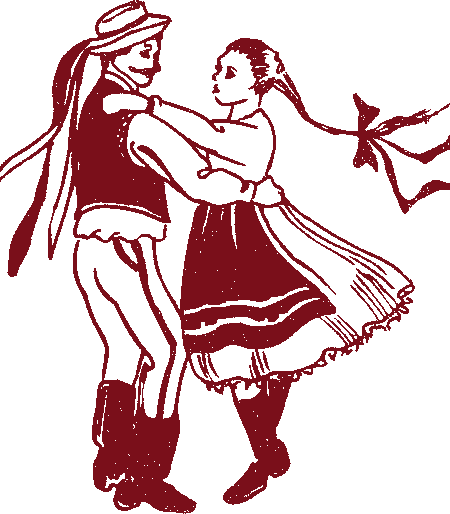
In the early 1970s, several Hungarian folk musicians came upon a TÁNCHÁZ, or dance house, in the village of Szek. Although located now in Romania (and named Sic), the village is ethnically Hungarian, and the discovery of the Hungarian TÁNCHÁZ in Szek sparked the TÁNCHÁZ Movement, a resurgence of village-style dance and music, popular today in many part of the world. Here in Szek were living peasant musicians performing for dancers in a style that was only known at that time through the transcriptions and tapes of ethnomusicologists and composers such as Bela Bartok and Zoltan Kodaly. Suddenly, the music came to life, and the playing style, which could never be properly notated on paper, could be learned directly from the villagers. Urban folk musicians soon discovered that there were other remote villages where the TÁNCHÁZ traditions was alive. Each region of Hungary had its own particular style of music and dance, and today many of the regions of Hungary have been studied and their playing styles, dance steps and improvisations are enjoyed and preserved in the TÁNCHÁZes of the cities.
(from program of Bartok Folkdance Studio and Ujstilus's premiere performance at Kresge Auditorium, M.I.T.)
 Mondák
 Vicc
 Költő / Író
 Népdal
