|
|
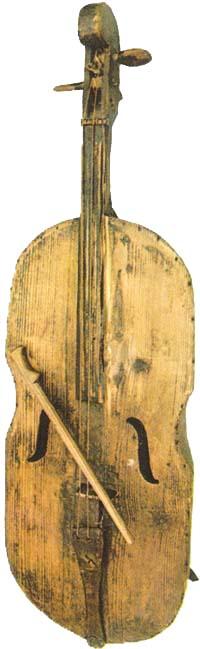
ÜTŐGARDON
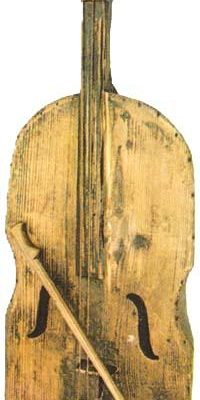
A gyimesi csángók zenekara két hangszerből áll: a hegedűből és a kísérő ütőgardonból. Ezt a cselló formájára emlékeztető, egy darab fából teknőszerűen kivájt hangszert valójában ütős hangszerként használják. Egy hangra hangolt húrjait bottal ütik, s közben a vékonyabb húrt csipkedik, s az a fogólapra visszacsattanva olyan hatást kelt, mintha dob szólna. A régi magyar tánczenében gyakran használták a kétfenekű dobot tánckísérő hangszerként, éppúgy, mint ahogy ma is hallható még a balkáni népeknél. A gardon a bunkóval és vesszővel ütöt dob hangsúlyos és hangsúlytalan hangjainak hatását kelti, csakhogy ez nem a sípot kíséri, hanem a hegedűt.
HIT GARDON
The orchestra the Csángoes of Gyimes consisted of two instruments: the violin and the accompanying beaten gardon. Gouged from one piece of wood in the same manner as a trough, and resembling a cello in shape, the beaten gardon is actually used as a percussion instrument. The strings tuned to one tone are hammered with a stick, while the thinner string is plucked simultaneously so that it recoils on the finger board with a sound like that of a drum. In old Hungarian dance music the double-buttoned drum was frequently used to accompany dancing, and it is still used in this way among the peoples of the Balkans. The gardon sounds like the downbeat and upbeat notes of the drum beaten with a club and cane, but it is used to accompany the violin.
By Sebő Ferenc
|
|
|
 1956-os Forradalom — October 23 National Day
 .
Hosting, security, and maintenance for Hungarian cultural, educational, and scholarly projects — free to the organizations, funded by readers like you.
Support this work →








 Mondák
 Vicc
 Költő / Író
 Népdal