











Description
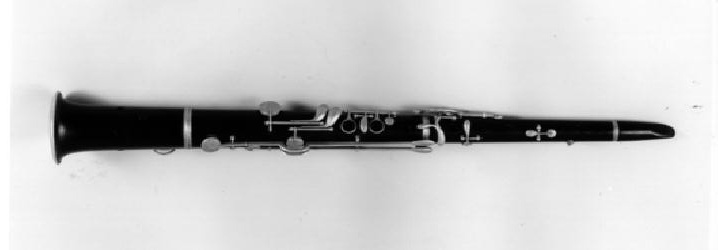
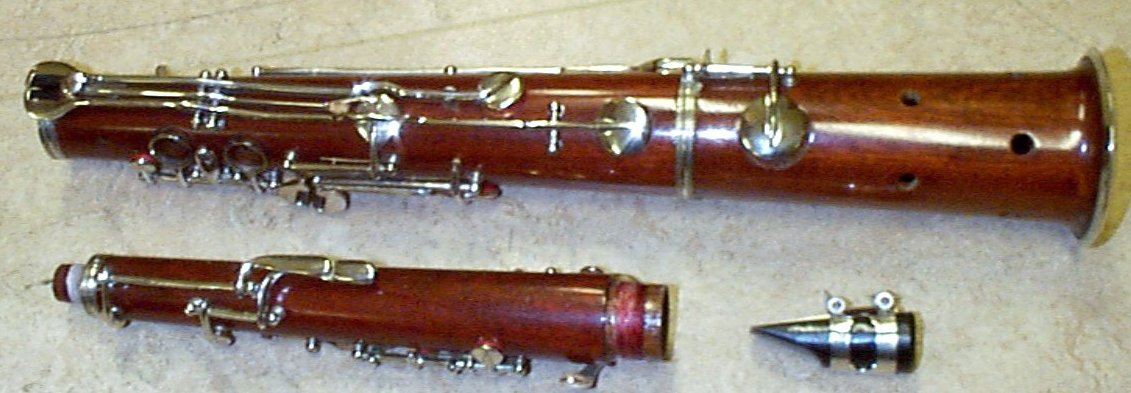
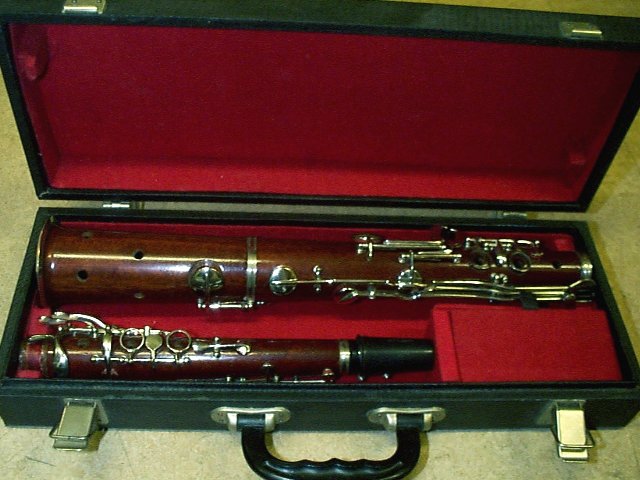
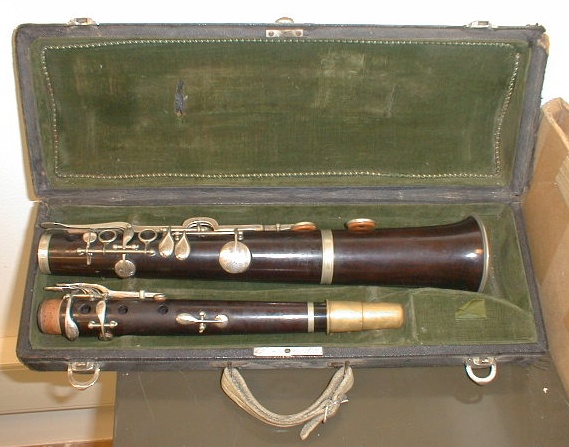
The tárogató is a single-reed, conical-bore woodwind, created in Hungary around the turn of the century shortly after the invention of the saxophone. The tárogató is sometimes called the national instrument of Hungary (on the other hand, so is the cimbalom).
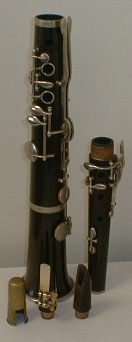
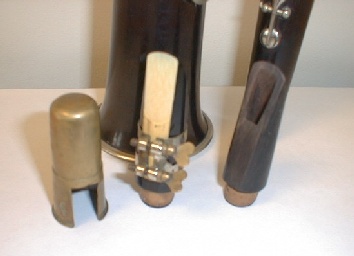
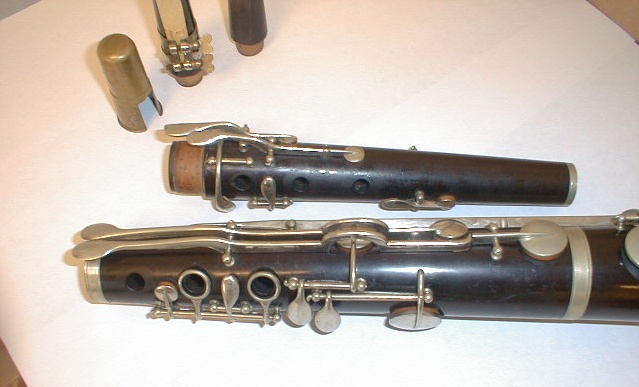
The mouthpiece and reed are roughly similar to those on a clarinet, but although newer tárogató mouthpieces take a clarinet reed, the actual mouthpieces are not interchangeable. The fingering is also roughly similar to an Albert-system clarinet, but because of the conical bore, the tárogató breaks into the upper register an octave higher like a saxophone, rather than the musical twelfth of the clarinet. Thus the thumb hole and two upper keys used to bridge the lower part of the upper register are omitted. The tárogató also has an extra key down on the bell, operated by the right thumb. A readable fingering chart for the B-flat tárogató may be found in [ref 3].
Because of the conical bore, tuning a tárogató by sliding the mouthpiece like for a clarinet will not produce good results. The various harmonics will not change together with the mouthpiece position, so that the instrument rapidly becomes “balky” or difficult to play. If your instrument does not play at the pitch you desire, consult a highly qualified and experienced saxophone mouthpiece expert, since saxophones have the same difficulty.
History
The modern tárogató was invented in the 1890’s, either at the Schunda Factory [ref 2,3] or the Stowasser Factory [ref 1]. Both factories made all of the early tárogatók. In either case, the story [ref 1] of the inventor being offended by the large holes and metal construction of the newly invented (circa 1842) saxophone probably contains some truth.
The tárogató featured here should not be confused with the historical Hungarian instrument of the same name, sometimes called a kuruc tárogató. The historical tárogató was a double-reed conical-bore instrument similar to a shawm or a Vienna oboe. Since all living tradition of playing the historical tárogató in Hungary had died out by the 1830’s, the name was recycled.
New Instruments
New tárogatók are still made by Karl Hammerschmidt & Söhne in Germany. The elder Hammerschmidt used to produce these instruments for Stowasser. The quality is high, and they play well. The walls are thicker than the old Stowasser instruments, which helps prevent cracking, but also increases the weight.
Used Instruments
If you are in the market for a used tárogató to play, look for ones with two register keys for the left thumb. Notes in the upper half of the upper register can be difficult or impossible to sound with only one register key.
One place that used to sell both new and used tárogatók was Lark in the Morning, though their listing is no longer online. Prices there ran around $4,000 to $5,000. As a comparison, the tárogató pictured above was purchased from a music store in Budapest for $750. Many new tárogatók may be found in Romania as well, but the quality is generally poor.
Instruction
There is a systematic tárogató course book written by Julius Kaldy, distributed by Edition Neuma, ENR 007, Tahi u. 94, Budapest 1135, Hungary.
There is a summer camp in Hungary where the tárogató, clarinet, and saxophone are taught, held in the city of Eger. The camp includes workshops, competitions, private lessons, and a concert.
People
Players of the tárogató in the USA have included J. Robert Moore, an associate professor of music at the University of Oregon; Esther Lamneck, Director of the NYU New Music Ensemble; and Mike Curtis, who has several recordings listed in the discography below. In Hungary, Berán István, formerly of the group Méta, plays the tárogató and has made various CDs. In Germany, there are Peter Brötzmann (jazz) and Mars Williams.
Societies
An International Tárogató Society exists. It was created by Csaba Nagy and others at a 1996 Tárogató conference in Hungary.
Discography
Cigány Vigadalom: Tárogató és Cimbalom / Török Sándor és Cigányzenekara
New York: Fiesta, FLPS-1656 [1980], 33⅓ rpm stereo
Tárogató
Hungary: Hungaroton, HCD 31294 [1990], CD
Csaba Nagy, tárogató; Péter Ella, harpsichord; Viktória Herencsár, cimbalom
Hej, Rákóczi!
Hungary: Hungaroton/Qualiton HCD 10278 [1992], CD
Nagy Csaba
Virtuoso Violin, Clarinet and Tárogató Music / György Lakatos, Sándor Kecskés
Hungary: Qualiton SLPX 10125 [196-], 33⅓ rpm stereo
Történelmi Dalok Tárogatóra és Cimbalomra
Hungary: Qualiton LPX 10099 [1965], 33⅓ rpm
Sándor Burka, tárogató; János Németh, cimbalom; Mihály Szitai, bass; Dezső Orogona, viola
Petrica Pasca — taragot — Melodii din Tara Zarandului
Romania: Electrecord-Cs 0319
Street Song, Mike Curtis Klezmer Quartet
USA: Louie Records 006 (1997)
Between 2 Worlds, Oomph Intercontinental Klezmer (Mike Curtis)
NY: Global Village Records 135 (1993)
Path, Dave Leslie with Mike Curtis
USA: Orb Recordings ORB001-D (1993)
References
[1] Benade, Arthur H. Fundamentals of Musical Acoustics. New York: Dover Publications, 1990.
[2] Sárosi, Bálint. Folk Music / Hungarian Musical Idiom. Budapest: Corvina, 1986.
[3] Moore, Robert J. Saxophone Journal. Needham, Mass: Dorn Publications, March/April, 1996.
Photo Credits
[1] Edinburgh University Collection of Historic Musical Instruments
[2] Leonardo Fuks
[3] Leonardo Fuks
Daniel Seidenberg, Mal Harris, and Leonardo Fuks contributed information for this page.
 Mondák
 Vicc
 Költő / Író
 Népdal
