




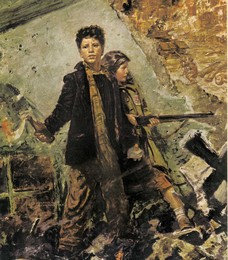



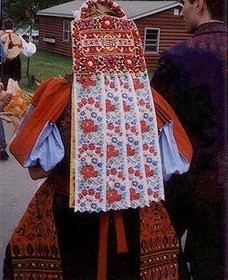


Fekete Március — The Târgu Mureș / Marosvásárhely Ethnic Clashes, March 19–20, 1990
Three months after the fall of Nicolae Ceaușescu, the Transylvanian city of Târgu Mureș (Marosvásárhely) — split almost evenly between ethnic Romanians and Hungarians in a population of about 160,000 — became the site of the bloodiest inter-ethnic violence in post-communist Romania. Hungarians call the events of March 19–20, 1990 Fekete Március, “Black March.”
Background
The collapse of the dictatorship in December 1989 lifted decades of enforced silence on minority-rights demands. Hungarian writer András Sütő helped organize a candlelight march on February 10, 1990, in which some 100,000 people demonstrated silently for the right to Hungarian-language education — a right sharply curtailed under Ceaușescu.
The backlash organized quickly. Vatra Românească (“Romanian Hearth”), a nationalist organization founded in Târgu Mureș in early 1990, mobilized around a series of incidents involving Romanian national monuments — graffiti on a statue of Avram Iancu, a toppled statue of Nicolae Bălcescu in nearby Sovata — framing Hungarian minority-rights demands as a separatist and anti-Romanian threat. On March 4, Vatra Românească held a counter-rally in the city that included direct incitement against Hungarian community leaders. On March 15, Hungarian national-day celebrations drew accusations of nationalism; the following day, Romanian shopkeepers’ Hungarian-language signage was vandalized, along with a Hungarian Protestant church. On March 16, further provocations occurred at a pharmacy, where protesters defaced Hungarian-language labels. Rumors — many unfounded — circulated in the surrounding countryside about Romanians being mistreated in the city.
The demographic backdrop mattered too: Ceaușescu-era settlement policy had already shifted the city’s balance, with the Hungarian share of the population falling from about two-thirds in 1977 to roughly half by 1985 — the near-even split that made the city a flashpoint by 1990.
March 19–20, 1990
On March 19, buses and trains brought Romanian villagers from the surrounding countryside into Târgu Mureș. A crowd attacked the headquarters of the Democratic Alliance of Hungarians in Romania (RMDSZ/UDMR); Hungarians defending the building were beaten. Among the injured was András Sütő, struck with such force that he suffered multiple fractures and lost the sight in one eye — he was evacuated first to Bucharest, then airlifted to Budapest for treatment. His attackers were never identified or convicted.
The following day, roughly 15,000 Hungarians gathered in the city’s main square to protest. Facing them were several thousand ethnic Romanians, their numbers swelled again by busloads of villagers from outside the city — despite assurances from police that access roads had been sealed. At around 5:30 p.m. the crowd broke through a thin police line of about fifty officers. The attackers carried axes, pitchforks and clubs; the Hungarian demonstrators improvised defenses from dismantled fences and benches, and Molotov cocktails were thrown. A Romanian army unit did not restore order until the third day.
Five people were killed — three Hungarians and two Romanians, one of them a passenger in a truck that struck a Hungarian demonstrator and crashed into a Greek Catholic church. A later Romanian parliamentary inquiry put the number of wounded at 190 Romanians and 88 Hungarians, out of roughly 278–300 injured in total. Among the ethnic Romanians hurt was Mihăilă Cofariu, beaten so severely he suffered permanent neurological damage; footage of his beating was later broadcast internationally — and Western media outlets frequently misidentified him as Hungarian, a persistent factual error in early foreign coverage of the riots. An eyewitness account has also claimed the Securitate, Ceaușescu’s dissolved secret police, helped orchestrate the unrest in order to justify creating Romania’s new post-communist intelligence service (SRI) — an allegation that has never been formally investigated.
Response and Aftermath
A Human Rights Watch report on the events concluded that Romanian authorities “failed to respond in an adequate manner to protect the citizens.” More than forty people were eventually convicted for their roles in the violence — all but two of them Hungarians or Hungarian Roma, despite Romanian villagers having been bused in as the primary aggressors. Pál Cseresznyés, an ethnic Hungarian convicted for the beating of Cofariu, served most of a ten-year sentence before being released in 1996 by President Emil Constantinescu as a gesture of reconciliation; his co-defendant Ernő Barabás fled to Hungary, which refused Romania’s extradition request.
Roma residents of Târgu Mureș played a notable, and at the time under-recognized, role defending Hungarian demonstrators. Béla Puczi, who led a group of Roma defenders on March 20, later fled to Hungary; he died in 2009 and was posthumously honored with a memorial plaque and, in 2021, a public square named after him near Budapest’s Nyugati station. Several other Roma residents later received the Petőfi Memorial Certificate for Courage and the Hungarian government’s Minorities Award.
In the following years the city’s population fell by roughly ten percent, driven mainly by Hungarian emigration to Hungary. The violence, though shocking, did not spiral into the kind of sustained inter-ethnic war that engulfed Yugoslavia in the same period — a divergence historians attribute in part to the refusal of Romanian intellectuals to lend the nationalist mobilization the kind of support their counterparts gave to Slobodan Milošević, and to Hungarian community leaders in other Székely towns successfully discouraging reinforcements from heading to Marosvásárhely, which helped contain the violence to the city itself.
Commemoration
March 19 is observed by Hungarian communities as a memorial day for the events. Budapest’s House of Terror Museum has documented the events in a historical summary by historian Gábor Balogh, and the book Egymásnak ítélve — Fekete március Marosvásárhelyen (published in both Hungarian and Romanian) remains a standard account. To this day, no one has been held responsible for the organized transport of the attackers into the city, nor for the assault on Sütő András.
Sources: Human Rights Watch (1990); “Ethnic clashes of Târgu Mureș,” Wikipedia; “The Black Spring of 1990,” Parts I–II, Transylvania Now; “House of Terror Museum Remembers Victims and Heroes of 1990 Black March,” Hungarian Conservative; “Marosvásárhely fekete márciusa,” moszkvater.com.
Update (March 2010): the Petőfi Award for Standing Firm, twenty years on
On March 11, 2010, the House of Terror Museum and the Civic Culture Foundation jointly presented the Petőfi Award for Standing Firm (“Petőfi Emléklap a Helytállásért”) in Budapest to Roma Hungarians who had been imprisoned for defending their Hungarian neighbors during the Black March violence, twenty years earlier. Museum director Mária Schmidt opened the ceremony by quoting former prisoner Béla Puczi’s own summary of the ordeal — “Three days a Hungarian” — describing how briefly Romania’s post-communist state was willing to treat its Roma citizens as fellow Hungarians before turning on them once again.
Schmidt argued that the pogrom attempt was orchestrated by the old communist nomenklatura and the reconstituted secret services to prepare their own survival, with Ion Iliescu’s provisional government backing the newly formed “Vatra Românească” cultural association, whose anti-Hungarian agitation drove the violence. She noted that while Hungarians and Romanians had toppled the dictatorship together in December 1989, the following March they were deliberately set against each other — Romanian miners against Bucharest, workers against intellectuals, revolutionaries recast as hooligans — so that the beneficiaries of the fallen regime could not be challenged by a united opposition. Several ethnic-Hungarian Roma from Marosszentgyörgy and the area around Marosvásárhely who had stood with their Hungarian neighbors received long prison sentences, while no Romanian participant was ever convicted — a debt of gratitude, Schmidt said, that went unpaid for twenty years. Puczi Béla himself, who fled to Hungary, waited a decade for refugee status (having been deported back from France in the meantime) and received neither steady work nor citizenship.
Bishop László Tőkés, president of the Hungarian National Council of Transylvania, recalled that the National Salvation Front had apologized to national minorities on February 5, 1990 and promised individual and collective rights — only for Ion Iliescu to be warning of Transylvanian “separatism” by the end of that same month. He said the first free Hungarian national holiday on March 15, 1990 became the pretext for humiliating the Transylvanian Hungarian community, and that the post-communists applied a divide-and-rule strategy that split not only Hungarians from Romanians but miners from Bucharest residents, workers from intellectuals. He called the events “walking over unburied dead,” said Hungarians “share in the shame” of the twenty-year silence, and voiced regret that communism’s victims are still treated as less significant than Holocaust victims. Fidesz MP Balog Zoltán, a co-founder of the award, called for both moral and material restitution and said the deeper answer lay in civic courage: “the real Hungary consists of civic courage.”
The Petőfi Award for Standing Firm was presented to Lőrinczi József, Sütő József, the widow of Béla Puczi, and Szilágyi József; Szilveszteri Kis Péter and Tóth Árpád — who died in 1991 from injuries suffered during his arrest and interrogation — received it posthumously, accepted on their behalf by Father Baricz Lajos of Marosszentgyörgy. Kincses Előd, vice-president of the Mureș County National Salvation Front at the time of the violence, also spoke, recalling how he had held back Székelys who had been provoked by Securitate agents from marching on Târgu Mureș. Tőkés noted further commemorations were planned: a March 17 conference at the European Parliament in Brussels, a torchlight “March of Truth” in Târgu Mureș on March 19, an international conference on March 20 bringing together Hungarian and Romanian participants and MEPs, and an ecumenical rally that afternoon at the city’s fortified church.
Source: Magyar Lobbi action letter, March 20, 2010, item 8 (Tőkés László’s press office, quoting the March 11, 2010 award ceremony).
 Mondák
 Vicc
 Költő / Író
 Népdal
