







A letter to Dwight Cramer of the River Road Unitarian Church, Bethesda, Maryland, following an activity that church organized in October 1999 honoring its sister congregation at Fiatfalva, Transylvania — without identifying that congregation’s members as Hungarian.
Joseph Priestley District
River Road Unitarian Church
6301 River Road
Bethesda, MD 20817
Dear Mr. Dwight Cramer,
I want to thank you for helping to organize an activity in honor of the Unitarian church at Fiatfalva, which after all is the sister church of your River Road Unitarian church at Bethesda. By doing so, your Bethesda congregation pays notice to the distinct and unique character of its sister Hungarian congregation at Fiatfalva in Transylvania. However, I was surprised that no direct mention was made of the nationhood of the members of the Transylvanian congregation you were honoring. It is obvious that their nationhood — or their ethnicity, as it would be called in North America — is not Romanian but Hungarian.
First of all, since the concept of nation is being misused in this country, it is important to define it correctly. According to The Oxford Dictionary of Current English, in its 1985 Oxford University Press edition, nation is defined as a “community of people of mainly common descent, language, history, or political institutions and usu. sharing one territory.” In this regard, to call Washington, D.C. the nation’s capital is a mistake, as it is to call the United States a nation. It is not a nation, this country, because it is formed of many nations — the Anglo-American nation, the Amish nation, the Jewish nation, the Black nation, the Cuban nation of Florida, the Puerto Rican nations of New York, Chicago, and of Puerto Rico, the Mexican nation of California, the Spanish American nations of Texas and New Mexico, the Hawaiian nation, the Japanese American nations of Hawaii and California, the native Indian nations, the Chinese nation of California, the Southern nation, New England’s Yankee nation, etc.
There is, however, the United States as one country and as a state, defining state as a juridical entity in national and international law. But the fact that there is one federal government does not deny the fact that the United States is composed of many nations, living all together in one country. Therefore, it should not be a problem to identify the Hungarians of Transylvania as such, even though they are Romanian citizens with a Romanian passport. After all, there are Hungarians, Germans, Vlachs (Romanians), and Roma living together in Transylvania, but that does not make them all Romanian nationals, i.e., ethnic Romanians.
Therefore, to organize an activity which portrays the national identity of a people — by showing their folk art, and Hungarian dances and music — without naming it Hungarian is like organizing, in the United States during the time of Hitler’s Third Reich, an exhibition about Jewish culture and civilization in Germany without calling it Jewish or German-Jewish, to avoid offending the sensibilities of the pre-war German embassy.
Also, to mention that the founder of the Unitarian faith was “a Transylvanian from Romania” is a mistake that would not have passed a test in college, or even in the show Jeopardy. Just to refresh memories: Transylvania became a self-governing principality under the protection of the Ottoman Sultan as a result of the defeat of the Hungarian king and his army at Mohács in 1526.
The Principality of Transylvania played a pioneering role in promoting religious tolerance at a time of religious intransigence in Europe. Another date to keep in mind in this regard is 1568. The Diet of Torda, in Transylvania, gives the world its first legal guarantee of religious freedom, declaring that “everyone may follow the religion of his choice, and no one may interfere with persons professing any other faith.” For this contribution, Transylvania is honored among the pioneers of religious tolerance at the Reformation Wall in Geneva, alongside some of the other better-known giants like Luther and Calvin.
The Principality of Transylvania, which acted in a semi-independent fashion from the Sublime Porte (Constantinople) in international relations, retained its status until 1699, when by the Treaty of Karlowitz the Ottoman Empire ceded it to Austria. Transylvania was part and parcel of the Kingdom of Hungary, composing part of Austria-Hungary, until 1919, when it was annexed by Romania. Romania, on the other hand, did not exist as an official name until 1861, when the Danubian Principalities of Moldavia and Wallachia — which at the time belonged to the Ottoman Empire — adopted the name Romania after joining together that year. Romania was not recognized as an independent country by the great powers until 1878. So when Unitarianism was created in Transylvania, there was no Romania in sight. Therefore, to say that the founder of the Unitarian creed was “a Transylvanian from Romania” is tantamount to saying that Roger Williams and Anne Hutchinson, who laid the foundations of the colony of Rhode Island between 1636 and 1638, were originally members of the Massachusetts Bay colony “of the United States.”
And if it sounds politically incorrect to declare publicly that the members of the Fiatfalva congregation are Hungarians, because that might upset the Romanian legation in Washington — isn’t it true that to abstain from saying it makes one an accomplice of the Romanian authorities, who want to deny the just and God-given identity of a people who are, after all, members of your sister congregation? Because to think that calling them Hungarians is not right might be for a reason. Could it be because the Romanians do not like it? If so, then why? Because — like the Serbs, who tried to repress the identity of the Kosovo Albanians so as to maintain a firm grip over Kosovo — the Romanians want to repress the national identity of the Hungarians in Transylvania, so that they will always maintain their grip over a land that, before God, is not theirs but the Magyars’.
To be a Christian is to be politically incorrect if the policy is wrong and unjust, and it means to be courageous. Jesus was courageous when He denounced injustice and preached the truth at the Temple. We have to follow His example.
Finally, some members of your congregation said that Transylvania will never be Hungarian. They might be right, in that it will never rejoin Hungary. But we shall not discard the possibility that a multinational Transylvania might one day become independent — like Croatia, Ukraine, Slovakia, and Bosnia-Herzegovina did, and like Kosovo would not long after. God is great, and I trust in His justice, as it triumphed with the independence of the aforesaid countries.
Árpád Kovács, October 1999.
For Context: Dwight Cramer’s Original Letter
River Road Unitarian Church, Bethesda, MD. October 27, 1999. Addressed to Árpád Kovács, in reply to his letter of October 20.
Dear Mr. Kovács:
Thank you for your thought-provoking letter of October 20. The identical text has been received from other senders. Please share this reply with them.
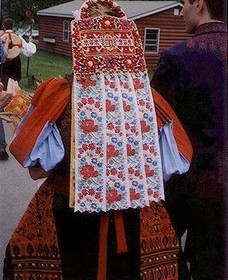
We thoroughly enjoyed the wonderful performance of Hungarian dances in beautiful Hungarian costumes presented by the Tisza Dance Ensemble and Maros Ensemble at our church Oct. 16. The group has appeared before at our church for the same purpose, to raise money for our partner church in Transylvania. By the way, the village of Fiatfalva is 100% ethnic Hungarian except for about 500 Roma who live there also. Their children attend the same school and do receive some services from both the Unitarian and Reformed church. Another interesting thing about the village is that the two congregations share the same church building. So we find in Fiatfalva a village of mixed religions and mixed ethnicity living peacefully together.
River Road Church and our committee are fully aware of the history of Transylvania as you outlined so well in your letter. In our brochure about our partner church program, in our presentations and posters, etc., we always make clear that Unitarians are a minority (about 80,000) of ethnic Hungarians, and that Hungarians are an ethnic minority in Romania. These are the facts of life. Our best hope for peace is at least tolerance, if not cooperation. One hope I see is that the Hungarian Democratic party is a member of the coalition government. This is the type of cooperation that can, over time, gradually overcome extremist ideological nationalistic parties which only foment trouble — such as that led by Funar in Cluj. I would encourage ethnic Hungarians to support their own party in its efforts to work within the system, as it is doing now. I know some Unitarian ministers are active in that party and support cooperation as opposed to confrontation.
The constant tension within ethnic and cultural groups in this country between the desire to maintain the purity of their culture on the one hand, and the need to adapt to the circumstances they find themselves in on the other, will always remain. But with good will and patience, some accommodation is eventually found. As difficult as it is to overcome resentment and anger over past events, attention should be paid to the present and the prospects in the future for our children. To the extent these irritations and issues can be softened and/or resolved, the life of future generations will be improved. Every effort must be made to work toward this goal in Romania, so that we never see another Bosnia or Kosovo.
You might be interested to know that the 1997 and 1998 Fiatfalva Festivals presented marvelous piano concerts by a Romanian pianist, Eugene Albulescu. He was happy to help us raise money for a Unitarian church in an ethnic Hungarian village. We hope to promote such inter-ethnic support, at least here in the US, in the same way Romanian and Hungarian political parties are cooperating there.
We should not forget that one of the most outstanding examples of tolerance was that of King John Sigismund, who, counseled by his court chaplain, Francis (Ferenc) Dávid, issued the decree of January 1568, based on the recommendation of the Diet of Torda, for freedom of religious conscience. A minister and congregation could decide on their own what their beliefs were, as faith was a gift of God, so the decree said. Thus Catholic, Calvinist (Reformed), Lutheran, and Unitarian communities existed side by side. At the same time, in the rest of Europe, peoples of those faith groups were slaughtering each other. King John set a great example for tolerance. Can this spirit serve us again?
Sincerely,
Dwight Cramer
Chair, Partner Church Committee
Note: Cramer’s letter independently confirms King John Sigismund, Ferenc Dávid, and the January 1568 Diet of Torda as the origin of the religious-tolerance decree.
 Mondák
 Vicc
Vicc Költő / Író
 Népdal