




Battle of Pákozd (Sep 21)
The National Defense Committee, earlier approved by the Diet, was activated.
As it became obvious that Hungary’s independence can not be assured through diplomatic means, Kossuth had been proposing the Committee act as the integrating and decision-making body to pull together the defense forces and hasten the country’s overall military preparedness. With the Jellaçiç threat becoming increasingly ominous, parliament consigned such tasks to the National Defense Committee (Honvédelmi Bizottmány), under Kossuth’s chairmanship.
The other members were László Madarász, Pál Nagy, János Pálffy, József Pataky, Imre Sembéry.
As time passed, the National Defense Committee gradually took over significant roles from both the cabinet and the parliament. Contributing to its rise was the reluctance of Ferdinand V to approve Batthyány’s proposed cabinet changes, which largely crippled that body. Contributing also to the cabinet crisis were Defense Minister Mészáros’ continue field commitments and Széchenyi’s increasing mental problems. Thus the National Defense Committee eventually became a de facto government as the country prepared for and eventually engaged in warfare.
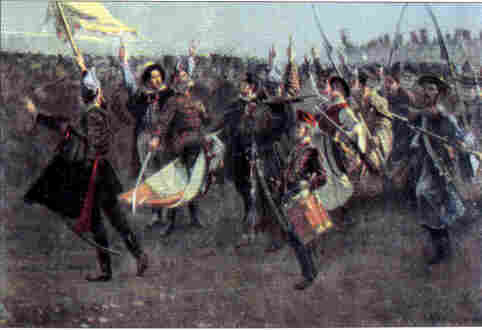
Battle of Pákozd(1)
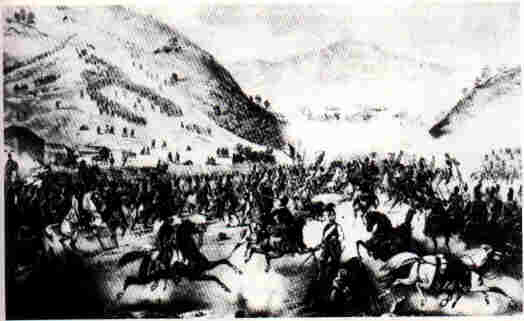
Battle of Pákozd(2)
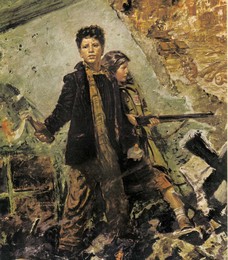
As Jellaçiç moved into Hungary, organizing a defense was a problem. Besides the paucity of trained troops, some of the military leaders seemed to have uncertain loyalties and counseled retreat. The Palatine tried to take charge, but the king forbade palatine Stephen to resist Jellaçiç, upon which he resigned and went into exile. Gen. Móga however organized a small army to intercept and gave Jellaçiç battle at Pákozd (near Székesfehérvár) on around Sept. 30. Móga’s outnumbered army -also a mixed affair- regular army, three honvéd battalions and Czech cannoneers from the Fifth Prague artillery regiment. Jellaçiç asked for, and obtained, a three day armistice,after which he retreated into Austria with six thousand of his men. The balance deserted and were taken prisoner by Colonel Perczel’s three thousand. For a map of troop movements click here
Back to Milestones of 1848-49
Source: Andrew Vadász’s Kossuth & 1848-49 Collection.
Illustrations
 Mondák
 Vicc
Vicc Költő / Író
 Népdal