











NB: This text was scanned from Kossuth and His Generals, pp. 386-98, but the text of the speech
was edited to conform with that in Proceedings, Speeches, &c., at the Dinner Given to Louis
Kossuth, at the National Hotel, Washington, Jan. 7, 1852 (Washington: Printed at the Globe
Office, 1852). Both versions appear to have been recorded by eyewitnesses of the address; the
text in Proceedings…, preferred here, appears to be more accurate, and also includes the audience
responses that are lacking in the book. The introduction to the version used here notes that Wm.
R. King, President of the Senate, served as President of the event; Daniel Webster, Secretary of
State, and Linn Boyd, Speaker of the House, sat with Kossuth on the dais. “Subsequent to the
removal of the cloth, a large number of ladies, anxious to hear the words of the distinguished
Magyar — which occupied in its delivery a few minutes over an hour — were admitted.” — p. 1.
[jpn]]
[Kossuth and His Generals, p. 386:]
The Hon. Chairman, announcing the next toast, said, ” it was one to which every generous
American would cordially respond”:
HUNGARY REPRESENTED IN THE PERSON OF OUR HONORED GUEST. Having proved
herself worthy to be free by the virtue and valor of her sons, the law of nations and the dictates of
justice alike demand that she shall have fair play in her struggle for independence.
To this toast, Kossuth responded as follows
[p. 3 in newspaper offprint ed.:]
SIR: As once Cineas the Epirote stood among the senators of Rome, who, with an earnest word
of self conscious majesty, controlled the condition of the world, and arrested mighty kings in their
ambitious march – thus, full of admiration and of reverence I stand amongst you, legislators of the
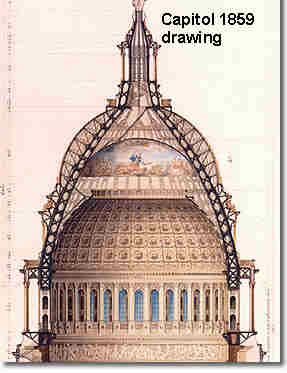
new capitol, that glorious hall of your people’s majesty. The capitol of old yet stands, but the spirit
has departed from it and come over to yours, purified by the air of liberty. [Applause.]
The old stands a mournful monument of the fragility of human things: yours, as a sanctuary of
eternal right. The old beamed with the red lustre of conquest, now darkened by oppression’s
gloomy night; yours beams freedom’s bright ray. The old absorbed the world by its own
centralized glory; yours protects your own nation against absorption, even by itself. [Applause.]
The old was awful with irrestricted [sic] power; yours is glorious with having restricted it. At the
view of the old, nations trembled; at the view of yours, humanity hopes. To the old, misfortune
was only introduced with fettered bands, to kneel at the triumphant conquerors’ heels. To yours,
the triumph of introduction is granted to unfortunate exiles invited to the honor of a seat. And
where Kings and Caesars never will be hailed for their powers, might, and wealth, there the
persecuted chief of a downtrodden nation is welcomed as your great Republic’s guest, precisely
because he is persecuted, helpless and poor. [Great applause and cheers.]
In the old, the terrible vae victis! was the rule. In yours, protection to the oppressed, malediction
to ambitious oppressors, and consolation to a vanquished just cause. And, while out of the old a
conquered world was ruled, you in yours provide for the common federative interests of a
territory larger than the conquered world of the
[p. 388]
old. There sat men boasting their will to be the sovereign of the world; here sit men whose glory
is to acknowledge the laws of nature and of nature’s God, and to do what their sovereign, the
people, wills. [Applause.]
Sir, there is history in these parallels . History of past ages and history of future centuries may be
often recorded in few words. The small particulars to which the passion of living men clings with
fervent zeal, as if the fragile fingers of men could arrest the rotation of destiny’s wheel, these
particulars die away; it is the issue which makes history, and that issue is always logical. There is a
necessity of consequences wherever the necessity of position exists. Principles are the alpha; they
must finish with omega, and they will. Thus history may be told often in few words.
Before yet the heroic struggle of Greece first engaged your country’s sympathy for the fate of
freedom in Europe, then so far distant, and now so near, Chateaubriand happened to be in Athens,
and he heard from a minaret raised upon the Propyleum’s ruins a Turkish priest in Arabic language
announcing the lapse of hours to the Christians of Minerva’s town. What immense history in the
small fact of a Turkish Imaun [sic] crying out “Pray, pray; the hour is running fast, and the
judgment draws near.” [Applause.]
Sir, there is equally a history of future ages written in the honor bestowed by you to my humble
self. The first Governor of independent Hungary, driven from his native land by Russian violence;
an exile on Turkish soil, protected by a Mahometan Sultan against the blood-thirst of Christian
tyrants; cast back a prisoner to far Asia by diplomacy; and rescued from his Asiatic prison by
America crossing the Atlantic, charged with the hopes of Europe’s oppressed nations; pleading, a
poor exile [tremendous applause,] before the people of this great Republic, his downtrodden
country’s wrongs and its intimate connection with the fate of the European continent, and, with
the boldness of a just cause, claiming the principles of the Christian religion to be raised to a law
of nations, [good! good!] and to see not only the boldness of the poor exile forgiven, but to see
him
[p. 389]
consoled by the sympathy of millions, encouraged by individuals, associations, meetings, cities,
and States, supported by operative aid and greeted by Congress and by Government as the
nation’s guest; honored, out of generosity, with that honor which only one man before him
received, and that man received them out of gratitude; with honors such as no potentate ever can
receive ; and this banquet here, and the toast which I have to thank you for ; Oh!, indeed, sir,
there is a history of future ages in all these facts! [Great applause.] They will go down to posterity
in the logical consequences of principles which are the foundation of these facts.
Sir, though I have the noble pride of my principles, and though I have the inspiration of a just
cause, still I have also the consciousness of my personal humility. Never will I forget what is due
from me to the sovereign source of my public capacity. This I owe to my nation’s dignity; [good!
good!] and therefore, respectfully thanking this highly distinguished assembly in my country’s
name, I have the boldness to say that Hungary well deserves your sympathy; that Hungary has a
claim to protection because it has a claim to justice. But, as to my own humble self, permit me
humbly to express that I am well aware not to have in all these honors any personal share. Nay, I
know that even that which might seem to be personal in your toast, is only an acknowledgment of
a historical fact, very instructively connected with a principle valuable and dear to every
republican heart in the United States of America.
Sir, you were pleased to mention in your toast that I am unconquered by misfortune, and
unseduced by ambition. [Great applause, and cries of “No! no!”] Now, it is a providential fact that
misfortune has the privilege to ennoble man’s mind and to strengthen man’s character. There is a
sort of natural instinct of human dignity in the heart of man, which steels his very nerves not to
bend beneath the heavy blows of a great adversities. The palm-tree grows best beneath a
ponderous weight. Even so the character of man. There is no merit in it. It is a law of psychology.
The petty pangs of small daily cares have often bent the character of men, but great misfortune
seldom. There is less danger in this than in great
[p. 390]
luck. And, as to ambition, I indeed never was able to understand how anybody can more love
[offprint ed. p 4]
ambition than liberty. But I am glad to state a historical fact as a principal demonstration of that
influence which institutions exercise upon the character of nations.
We Hungarians are very fond of the principle of municipal self government, and we have a natural
horror against the principle of centralization. That fond attachment to municipal self-government
without which there is no provincial freedom possible, is a fundamental feature of our national
character. We brought it with us from far Asia a thousand years ago, and we conserved it
throughout the vicissitudes of ten centuries. No nation has perhaps so much struggled and
suffered from the civilized Christian world as we. [Sensation.] We do not complain of this lot. It
may be heavy, but it is not inglorious. Where the cradle of our Saviour stood, and where his
divine doctrine was founded, there now another faith rules, and the whole of Europe’s armed
pilgrimage could not avert this fate from that sacred spot, nor stop the rushing waves of Islamism
absorbing the Christian empire of Constantine. We stopped these rushing waves. The breast of my
nation proved a breakwater to them. [Bravo! Bravo!.] We guarded Christendom, that Luthers and
Calvins might reform it. [Applause.] It was a dangerous time, and the dangers of the time often
placed the confidence of all my nation into one man’s hand, and that confidence gave power into
his hands to become ambitious. But there was not a single instance in history where a man
honored by his people’s confidence, had deceived his people by becoming ambitious. [Applause.]
The man out of whom Russian diplomacy succeeded to make the murderer of his nation’s
confidence — he never had it, but was rather regarded always with distrust. But be gained some
victories when victories were the moment’s chief necessity. At the head of the army,
circumstances placed him in the capacity to ruin his country. But be never had the people’s
confidence. So even he is no contradiction to the historical truth
[p. 391]
that no Hungarian whom his nation honored with its confidence was ever seduced by ambition to
become dangerous to his country’s liberty. [Applause.] This is a remarkable fact, and yet it is not
accidental; it is the logical consequence of the influence of institutions upon the national character.
Our nation, through all its history, was educated in the school of municipal self-government, and
in such a country ambition having no field, has also no place in man’s character.
The truth of this doctrine becomes yet more illustrated by a quite contrary historical fact in
France. Whatever have been the changes of government in that great country — and many they
have been, to be sure — we have seen a Convention, a Directorate, Consuls, and one Consul, and
an Emperor, and the Restoration, and the Citizen King, and the Republic; through all these
different experiments centralization was the fundamental tone of the institutions of France —
power always centralized; omnipotence always vested somewhere. And, remarkably indeed,
France has never yet raised one single man to the seat of power who has not sacrificed his
country’s freedom to his personal ambition! [Great applause.]
It is sorrowful, indeed, but it is natural. It is in the garden of centralization where the venomous
plant of ambition thrives. I dare confidently affirm, that in your great country there exists not a
single man through whose brain has ever passed the thought that he would wish to raise the seat
of his ambition upon the ruins of your countrv’s liberty, if he could. Such a wish is impossible in
the United States. [Applause.] Institutions react upon the character of nations. He who sows wind
will reap storm. History is the revelation of Providence. The Almighty rules by eternal laws not
only the material but the moral world; and every law is a principle, and every principle a law. Men
as well as nations are endowed with free will to choose a principle, but that once chosen the
consequences must be abided.
With self-government is freedom, and with freedom is justice and patriotism. With centralization
is ambition, and with ambition dwells despotism. Happy your great country, sir, for being so
warmly
[p. 392]
addicted to that great principle of self-government. Upon this foundation your fathers raised a
home to freedom more glorious than the world has ever seen. Upon this foundation you have
developed it to a living wonder of the world. Happy your great country, sir! that it was selected
by the blessing of the Lord to prove the glorious practicability of a federative union of many
sovereign States, all conserving their State rights and their self-government, and yet united in one
— every star beaming with its own luster, but all together one constellation on mankind’s canopy.
[Great applause and cheers.]
Upon this foundation your free countrv has grown to a prodigious power in a surprisingly brief
period, an attractive power in that your fundamental principle. You have conquered by it more in
seventy-five years than Rome by arms in centuries. [Good! Good!] Your principles will conquer
the world. By the glorious example of your freedom, welfare, and security, mankind is about to
become conscious of its aim. The lesson you give to humanity will not be lost. The respect for
State rights in the Federal Government of America, and in its several States, will become an
instructive example for universal toleration, forbearance, and justice to the future states and
republics of Europe. Upon this basis will be got rid of the mysterious question of language-nationalities, raised by cunning despotism in Europe to murder liberty. Smaller States will find
security in the principle of federative union, while they will conserve their national freedom by the
principles of sovereign self-government; and while larger States, abdicating the principle of
centralization, will cease to be a bloody field to sanguinary usurpation and a tool to ambition of
wicked men, municipal institutions will insure the development of local particular elements;
freedom, formerly an abstract political theory, will become the household benefit to municipalities;
and out of the welfare and contentment of all parts will flow bappiness, peace and security for the
whole. [Applause.]
This is my confident hope. Then will at once subside the fluctuations of Germany’s fate. It will
become the heart of
[p. 393]
Europe; not by melting North Germany into a Southern frame, or the South into a Northern; not
by absorbing historical peculiarities by centralized omnipotence; not by mixing in one State, but by
federating several sovereign States into a Union like yours.
[offprint p 5]
Upon a similar basis will take place the national regeneration of the Sclavonic States, and not
upon the sacrilegious idea of Panslavism, equivalent to the omnipotence of the Czar. [Applause.]
Upon a similar basis will we see fair Italy independent and free. Not unity, but union will and must
become the watchword of national bodies, severed into desecrated limbs to provincial rivalries,
out of which a flock of despots and common servitude arose. To be sure, it will be a noble joy to
this your great Republic, to feel that the moral influence of your glorious example has operated
this happy development in mankind’s destiny, and I have not the slightest doubt of the efficacy of
your example’s influence.
But there is one thing indispensable to it, without which there is no hope for this happy issue. This
indispensable thing is, that the oppressed nations of Europe become the masters of their future,
free to regulate their own domestic concerns. And to this, nothing is wanted but to have that “fair
play” [applause, and cries of “Fair play!” “Fair play”] to all, for all, which you, sir, in your toast,
were pleased to pronounce as a right of my nation, alike sanctioned by the law of nations as by the
dictates of eternal justice. Without this “fair play” there is no hope for Europe – no hope of seeing
your principles spread. [Great applause.]
Yours is a happy country, gentlemen. You had more than fair play. You had active operative aid
from Europe in your struggle for independence, which, once achieved, you so wisely used as to
become a prodigy of freedom, and welfare and a book of life to nations.
But we in Europe — we, unhappily, have no such fair play. With us, against every palpitation of
liberty all despots are united in a common league; and you may be sure that despots will never
yield to the moral influence of your great example. They hate the very existence of this
[p. 394]
example. It is the sorrow of their thoughts, and the incubus of their dreams. To stop its moral
influence abroad, and to check its spreading development at home, is what they wish, instead of
yielding to its influence.
We will have no fair play. The Cossack already rules, by Louis Napoleon’s usurpation, to the very
borders of the Atlantic ocean. One of your great statesmen — now, to my deep sorrow, bound to
the sick bed of far advanced age — [immense sensation] — (alas! that I am deprived of the advice
which his wisdom could have imparted to me) — your great statesman told the world thirty years
ago that Paris was transferred to St. Petersburgh. What would he now say when St. Petersburgh
is transferred to Paris, and Europe is but an appendage to Russia? [Immense cheering.]
Alas! Europe can no more secure to Europe fair play. Albion only remains; but even Albion casts
a sorrowful glance over the waves. Still we will stand our place, “sink or swim, live or die.”
[Cheers and cries of “Sink or swim.”] You know the word; it is your own. We will follow it; it
will be a bloody path to tread. Despots have conspired against the world. Terror spreads over
Europe, and, anticipating persecution, rules. From Paris to Pesth there is a gloomy silence, like
the silence of Nature before the terrors of a hurricane. It is a sensible silence, only disturbed by the
thousand-fold rattling of the muskets by which Napoleon murders that people that gave him a
home when he was an exile, and by the groans of new martyrs in Sicily, Milan, Vienna and Pesth.
The very sympathy which I met in England, and was expected to meet here, throws my sisters into
the dungeons of Austria. [Cries of Shame! shame! throughout the room.] Well, God’s will be
done! The heart may break, but duty will be done. We will stand in our place, though to us in
Europe there be no “fair play”. But so much I hope, that no just man on earth can charge me with
unbecoming arrogance, when here, on this soil of freedom, I kneel down and raise my prayer to
God: “Almighty Father of Humanity, will thy merciful arm not raise a power on earth to protect
the law of nations, when there are so many to violate it?” [Oh! Oh!] It is a prayer, and nothing
[p. 395]
else. What would remain to the oppressed if they were not permitted to pray? The rest is in the
hand of God.
Gentlemen, I know where I stand. No honor, no encouraging generosity, will make me ever
forget where I stand, and what is due from me to you. Here my duty is silently to await what you,
in your wisdom, will be pleased to pronounce about that which public opinion knows to be my
prayer and my aim; and be it your will to pronounce, or be it your will not to take notice of it, I
will understand your will, and bow before it with sincere reverence, and will go back over the
ocean, hopeless perhaps, but my heart full of admiration, love, and gratitude to your generous
people, to your glorious land. [Applause.]
But one single word even here may I be permitted to say — only such a word as may secure me
from being misunderstood. I came to the noble-minded people of the United States to claim its
generous operative sympathy for the impending struggle of oppressed freedom on the European
continent; and I freely interpreted the hopes and wishes which those oppressed nations entertain;
but, as to your great Republic, as a State, as a Power on earth, I stand before the statesmen,
senators, and legislators of that Republic only to ascertain from their wisdom and experience what
is their judgment upon a question of national law and international right. I hoped, and now hope,
that they will, by the foreboding events on the other great continent, feel induced to pronounce in
time their vote about that law and those rights. And I hoped, and hope, that, pronouncing their
vote, it will be in favor of broad principles of international justice, consonant with their republican
institutions and their democratic life. That is all. I know, and Europe knows the immense weight
of such a pronunciation from such a place. But never had I the impious wish to try to entangle this
great republic into difficulties inconsistent with its own welfare, its own security, its own interest.
I rather repeatedly, earnestly declared that a war on this account by your country is utterly
impossible,
[p. 396]]
and a mere phantom. I always declared that the United States, remaining masters of their actions
under every circumstance, will act as they judge consistent with their supreme duties to
themselves. But I said, and say, that such a declaring of just principles would insure to the nations
of Europe “fair play” in their struggle for freedom and independence, because the declaration of
such a Power as your Republic will be respected even where it should be not liked ; and
[offprint p 6]
Europe’s oppressed nations will feel cheered in resolution and doubled in strength to maintain the
decision of their American brethren on their own behalf with their own lives. There is an immense
power in the idea to be right, when this idea is sanctioned by a nation like yours. [Applause.] And
when the foreboding future will become present, there is an immense field for private benevolence
and sympathy upon the basis of the broad principles of international justice pronounced in the
sanctuary of your people’s collective majesty. So much to guard me against misunderstanding.
Sir, I most fervently thank you for the acknowledgment that my country has proved worthy to be
free. Yes, gentlemen, I feel proud at my nation’s character, heroism, love of freedom and vitality,
and I bow with reverential awe before the decree of Providence which placed my country in a
position that, without its restoration to independence, there is no possibility for freedom and the
independence of nations on the European continent. Even what now in France is about to pass
proves the truth of this. Every disappointed hope with which Europe looked toward France is a
degree more added to the importance of Hungary to the world. Upon our plains were fought the
decisive battles for christendom; [sic] there will be fought the decisive battles for the
independence of nations, for State rights, for international law, and for democratic liberty. We will
live free, or die like men; but should my people be doomed to die, it will be the first whose death
will not be recorded as suicide, but as a martyrdom for the world, and future ages will mourn over
[p. 397]
the sad fate of the Magyar race, doomed to perish, [sensation,] not because we deserved it, but
because in the nineteenth century there was nobody to protect the laws of nature and of nature’s
God.
But I look to the future with confidence and with hope. Adversities manifold of a tempest-tossed
life, could of course not fail to impress a mark of cheerlessness upon my heart, which, if not a
source of joy, is at least a guard against sanguine illusions. I, for myself, would not want the hope
of success for doing what is right. To me the sense of duty would suffice; therefore, when I hope,
it has nothing common with that desperate instinct of a drowning man, who, half sunk, still grasps
at a straw for help. No, when I hope, there is motive for that hope. I have a steady faith in
principles. I dare say that experience taught me the logic of events in connection with principles. I
have fathomed the very bosom of this mystery; and was I deceived in my calculations thereabout.
Once in my life I supposed a principle to exist in a certain quarter where indeed no principle
proved to exist. It was a horrible mistake, and resulted in a horrible issue. The present condition
of Europe is a very consequence of it. But precisely this condition of Europe proves that I did not
wantonly suppose a principle to exist there, where I found none. Would it have existed, the
consequences could not have failed to arrive as I have contemplated them. Well, there is a
providence in every fact. [Applause.] Without this mistake the principles of American
republicanism would for a long time yet not found a fertile soil on that continent, where it was
considered wisdom to belong to the French school. Now matters stand thus: that either the
continent of Europe has no future at all, or this future is American republicanism. And who could
believe that two hundred millions of that continent, which is the mother of a civilization, are not
to have any future at all? Such a doubt would be almost blasphemy against Providence indeed — a
just, a bountiful Providence. I trust with the piety of my
[p. 398]
religion in it. I dare say my very humble self was a continual instrument of it. How could I be else,
in such a condition as I was born, not conspicuous by any preeminent abilities — having nothing in
me more than an iron will, which nothing can bend, [applause,] and the consciousness of being
right — how could I, under the most arduous circumstances, accomplish many a thing which my
sense of honest duty prompted me to undertake? 0h, there is indeed a Providence which rules!
And even my being here, when four months ago I was yet a prisoner of the league of European
despots in far Asia and the sympathy which your glorious people honor me with, and the high
benefit of the welcome of your Congress, and the honor to be your guest, to be the guest of your
great Republic — I, the poor, humble, unpretending exile — is there not a very intelligible
manifestation of Providence in it? — the more, when I remember that the name of your humble but
thankful guest is, by the furious rage of the Austrian tyrant, to the gallows nailed?
Your generosity is a loud protestation of republican virtues against despotism. I firmly trust in
those principles; and, relying upon this very fact of your generosity, I may be permitted to say that
that respectable organ of the free press was mistaken which announced that I considered my
coming hither to be a failure.
I confidently trust that the nations of Europe have a future. I am aware that this future is
contradicted by bayonets of absolutism; but I know that bayonets may support, but afford no chair
to sit upon. I trust to the future of my native land, because I know that it is worthy to have it ; and
it is necessary to the destinies of humanity. I trust to the principles of republicanism; and,
whatever be my personal fate, so much I know, that my country will conserve to you and your
glorious land an everlasting gratitude. [Here the whole audience rose and cheered vociferously.]
 Mondák
 Vicc
Vicc Költő / Író
 Népdal