






Martyrs of Arad
Lajos Aulich Born 1793 in Pozsony; professional soldier, 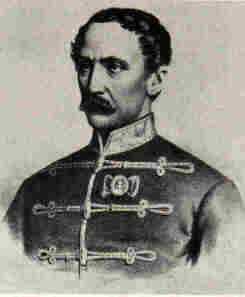 lieutenant colonel in the Austrian army. He became a honvéd colonel on October 24, 1848, and was named General at Kápolna. A strict disciplinarian : when Kossuth sent him requests, he answered:” please work through Görgey.” He suffered from gout, thus relieved of field duty. Appointed Minister of Defense, on July 14 1849.
János Damjanich Born 1804 at Staza, of Serbian lineage. Served in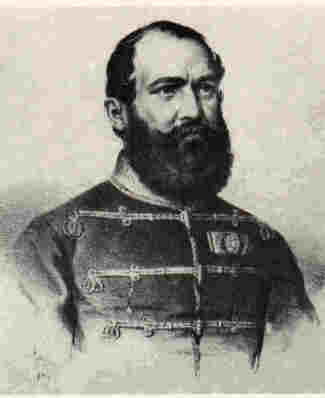 the Austrian army, where his liberal ideas put him at odds with Haynau.. Married Emilia Chernovich at Arad. A brave soldier on the battlefield, rapidly rose to lieutenant colonel in Oct 1848, and General in December. He became at odds with Antal Vetter. His victory at Szolnok effectively launched the 1849 spring offensive.
Arisztid DesewffyBorn 1802 at Csákány (Abaúj County). The peace era 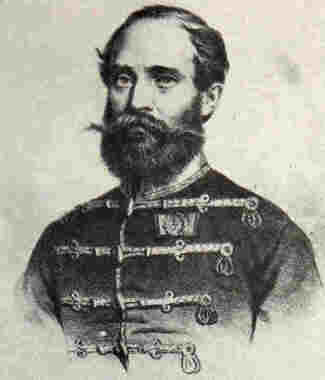 in the ‘thirties made promotions slow, thus he went into retirement as a captain in 1839. His wife and children dead, rejoined the army in 1848. First in the mounted national guard, later with the Honvéd. He commanded the 1st Corps, later the 9th. On July 5 1849 remarried, but promptly returned to the battlefield. After the defeat at Temesvár he did not escape to Turkey on the advice of his friend, the Prince of Liechtenstein. He was granted no clemency, however.
Ernő Kiss Born 1799 Temesvár; at the time of the 1848 revolution, 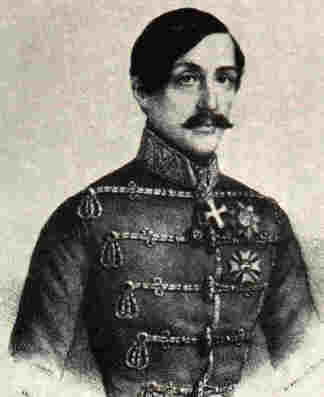 he was the commander of the 2nd Hannover cavalry.Promoted to General in late 1848. Not known as a good leader, nevertheless cheerful and brave in battle. Did not believe in the coming defeat.
Károly Knézich Born in 1808, in Veliki-Grdevac; his father an 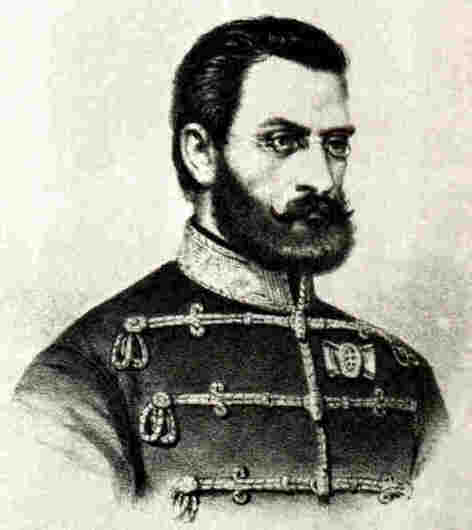 ethnic Croatian, serving in the Austrian army as a border guard officer. His mother was the daughter of the noted Omar Pasha. Knézich was a professional soldier, and in 1843 he publicly expressed his hatred of Metternich’s amoral policies, the cruelty of the Polish nobility in Galicia and the resultant poverty. He took part in battles with the Serbs, met up with General Damjanich at Várkony. He distinguished himself by conquering the defensive rings at Komárom. After Damjanich’s leg fracture, he was elevated to General and commander of the 3rd Corps. Görgey was not impressed with him, thus relieved him of command on June 20, 1849. He moved to the defense ministry, again named Corps commander. Surrendered at Világos.
György Láhner Born in 1795, in Necpál (Túróc County). He was a 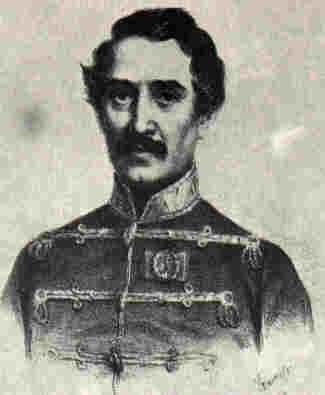 professional soldier, in Southern Hungary until September 1848, when he was ordered to the Defense Ministry as armament and mobilization inspector. Gained rapid promotions- in February 1849 to General. Due to his knowledge of industry and armaments manufacturing his main task was logistics.Also organized family moves necessitated by the mobilization. He married the Italian born Lucia Conchetti. . Kossuth said of him (in part): “…only three people had accomplishments (…) that could not be duplicated by others : General Láhner, Honvéd Colonel Lukács and Ferenc Ducsek“.
Vilmos Lázár Born in 1815, at Nagybecskerek (Délvidék, Southern 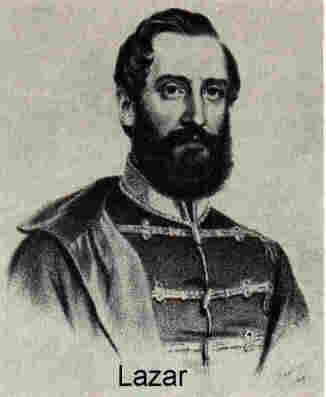 Hungary, Serbia today). He started a military career with the 34th infantry regiment. Lieutenant in Ferdinand 1st’s cavalry regiment. Resigned before 1848 and married the widowed Baron Mária Revitzky. Re-enlisted from his estate in Zemplén County and by February 1849 major in the Honvéd engineers. He was a brigade commander within the 9th division, and Bem appointed him a colonel after the battle of Temesvár. He retreated into Transylvania, hoping to start anew from there with reduced forces; surrendered August 19, 1849.
Count Károly Leiningen-Westerburg Born 1819 in Ilbenstadt 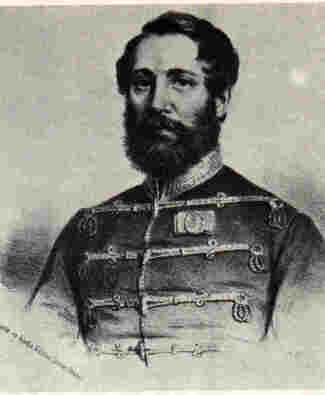 (Hessen, Germany) from a military family. He entered the Austrian army; married the Hungarian Elíz Sissány, in 1844. His regiment was ordered to Temesvár in 1848. Volunteered to fight Serbian insurgents. He also fought in Honvéd units, and in the spring 1849 offensives received promotion to General. Became a friend of Görgey and rumored to have executed Austrian prisoners during a siege in Buda. He always denied this allegation, even in his last statement.
József Nagysándor Born 1804, in Nagyvárad. He pursued a 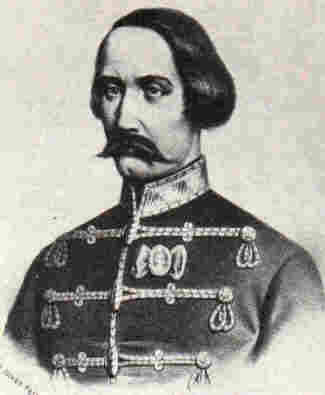 military career, but in 1847 asked for retirement. He returned into the service in 1848 in the national guards. Fought in the Southern campaigns and served under Damjanich, as brigadier. He took part in the Westward thrust from Szolnok and on April 10, 1849 was promoted to General. He led the 1st division in the capture of Buda, but defeated at Új Arad,where he capitulated on August 13 1849.
Ernő Poeltenberg Born 1813, in Vienna. Entered the military in 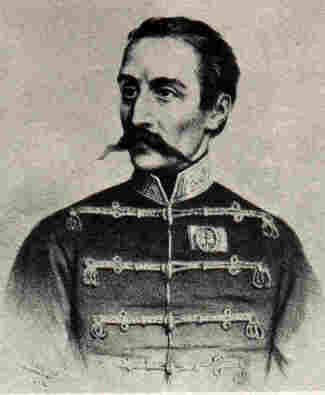 1830. In 1832 he became a lieutenant. March 1848 found him based in Vienna, whence he was moved first to Graz, then into Hungary. Fought Jellai’s Croat units and declared allegiance to the Hungarian constitution. Perhaps because he did not speak Hungarian, there was a move to deprive him of his ranks, but due to Görgey’s orders, he was promoted to major then Colonel and eventually General. Acquired fame in the battle of Kápolna and his successes continued in other engagements. His heroism at Győr was well noted. Participated in the surrender negotiations with the Russians and finally capitulated to them.
József Schweidel Born 1796, in Zombor (Délvidék, Southern 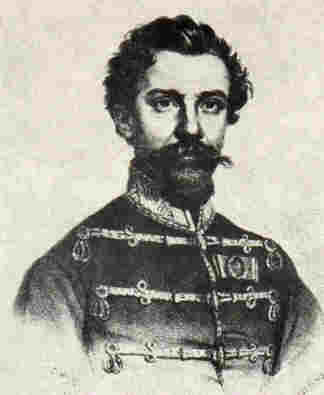 Hungary, Serbia today), he started as cadet with the 4th cavalry regiment, where eventually promoted to Major. His patriotism, specialized knowledge and character helped his eventual promotions. Acquired his military knowledge on the battlefield, including the Napoleonic campaign, culminating in the occupation of Paris. He married Domicella Bilinszka in 1827 and had five children. Due to his performance in the battle at Schwechat, the National Defense Committee promoted him to General in October 1848. From then on, he was fully committed to the Hungarian cause, and became a friend of Kossuth. On May 9, 1849 he was appointed as an Area Commander in Pest. Surrendered at Világos. Though the military tribunal recommended clemency, Haynau ordered his execution.
Ignác Török Born 1795, at Gödöllő, he finished the military 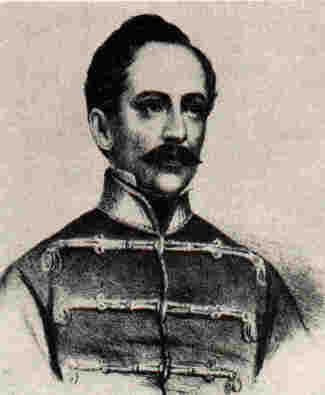 academy in Vienna. Went into active duty with the army engineers, and in 1838 transferred to the national guards, where he specialized in both temporary and permanent fortifications. He saw active duty in Galicia (Ukraine) and in Croatia. His pupils included Klapka and Görgey. He planned the fortifications at Komárom in the winter of 1848-49. When Majtényi, Komárom’s commandant, suggested surrender to Windischgraetz, thehonvéd staff forced him to resign and named Török to take charge. Ratified by the National Defense committee, he was promoted to General. He later resigned this position, since he did not consider himself qualified. Instead, he was charged with fortifying Buda, later to Szeged to erect fortifications along the Tisza. In his last hours he continued to study fortification plans.
Count Károly Vécsey Born 1807, in Pest; his father a General in 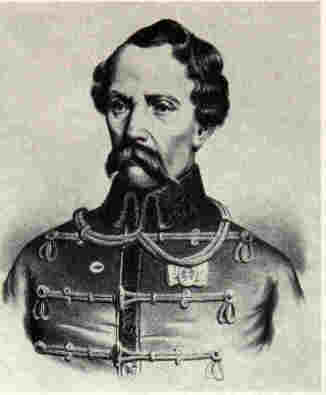 the “Nemesi Testőrség” (Guards of the Nobility) and participated in battles with Serbian insurgents. In late 1848, he became Lieutenant Colonel, later a General. He was a Division Commander in the middle Tisza region and participated with Damjanich in the battles at Szolnok. He later disagreed with Damjanich and was charged with taking Arad and Temesvár. Succeeded at Arad, not at Temesvár. When it was suggested that his lower Danube division should surrender, he wrote : ” I’ll hang up my Austrian sword, I am Hungarian, will stay with my country“. Kossuth honored his deeds in a letter dated January 23, 1849.
 Mondák
 Vicc
Vicc Költő / Író
 Népdal