





Kalotaszeg — a cluster of some 40 Hungarian villages west of Kolozsvár (Cluj), on the Kalota river — is one of the best-documented folk regions in Transylvania, known for its dense floral embroidery, the beaded bridal “párta” headdress, and wedding customs that survived largely intact into the 20th century. The photographs below, drawn from the region’s folk-costume record, accompany the region’s song archive below and the Pittsburgh Folk Dance & Music Symposium’s reenactment of a Kalotaszeg wedding.
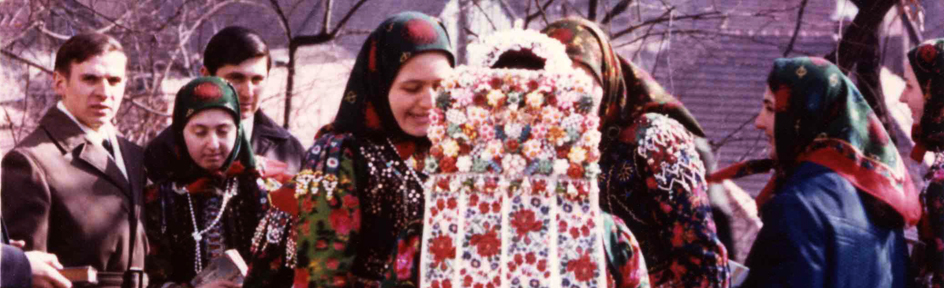
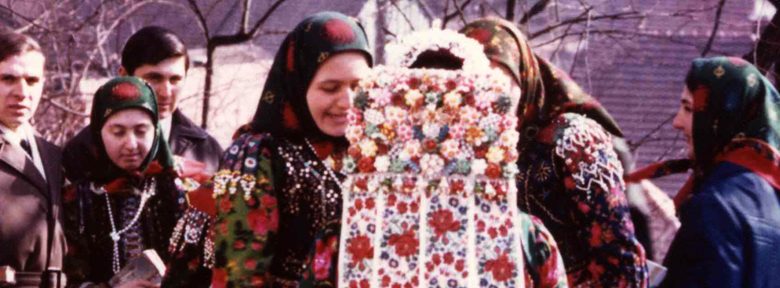
A Kalotaszeg wedding: guests admiring the decorated bridal headdress ("párta") before the ceremony.
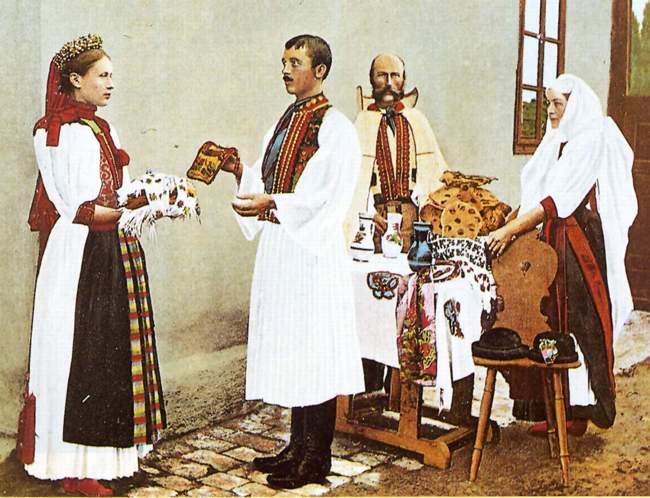
The wedding couple exchanging gifts beside the ceremonial wedding bread (kalács).
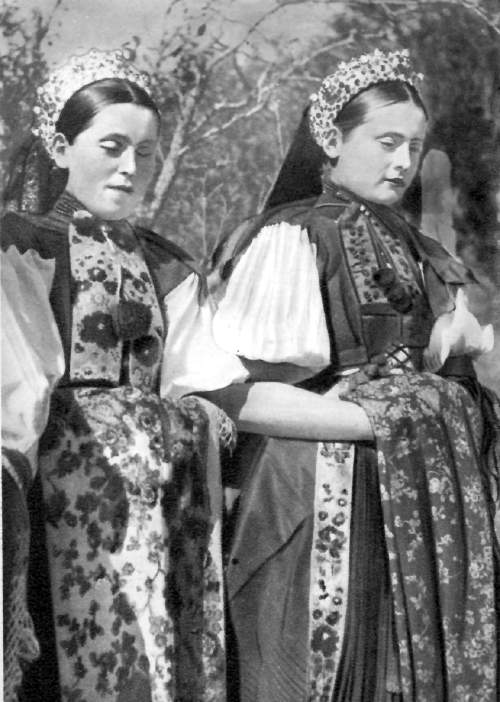
Two women in full Kalotaszeg festive dress and párta headdress.
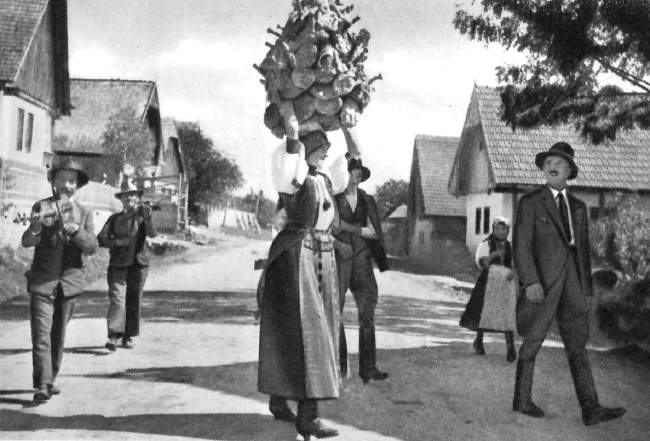
Carrying the dowry through the village on the way to the new household.
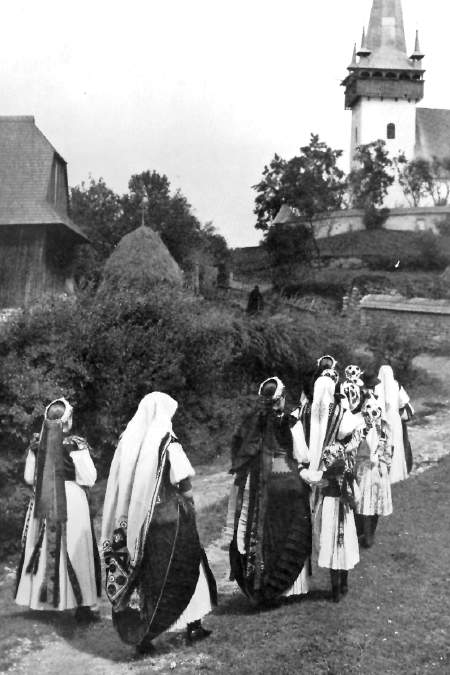
A wedding procession approaching the village church.
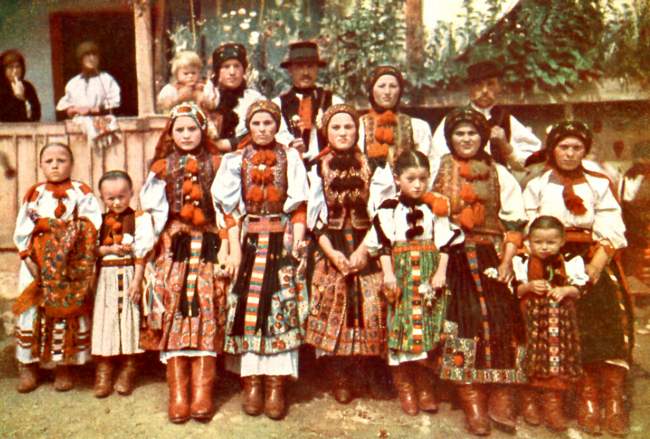
A multi-generation wedding party in full Kalotaszeg festive dress.
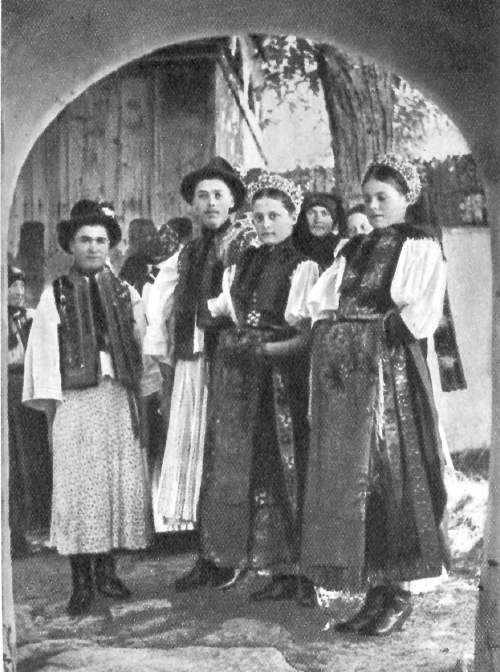
A Kalotaszeg wedding party portrait, early 20th century.
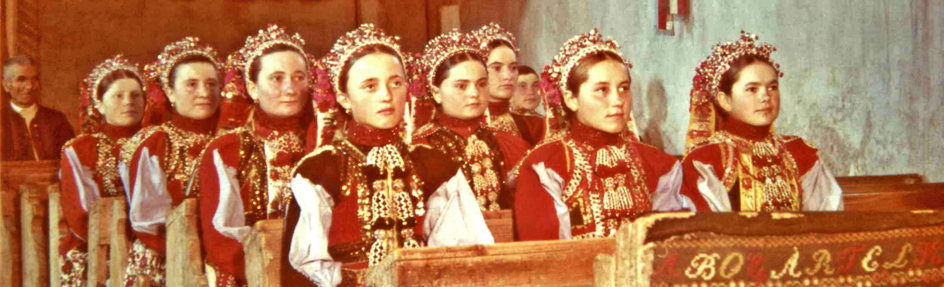
Young women in the beaded "párta" headdress, seated in church for a wedding.
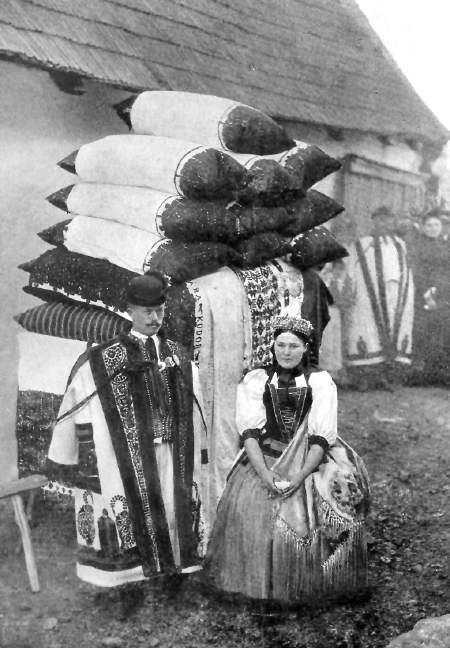
The groom’s family carrying the bride’s dowry — a stack of hand-woven pillows and linens, a Kalotaszeg wedding custom.
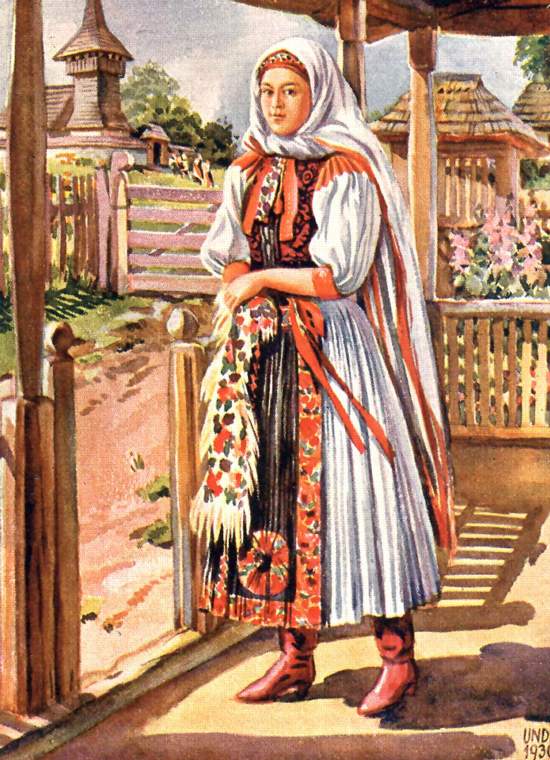
A Kalotaszeg woman in traditional dress (period illustration).
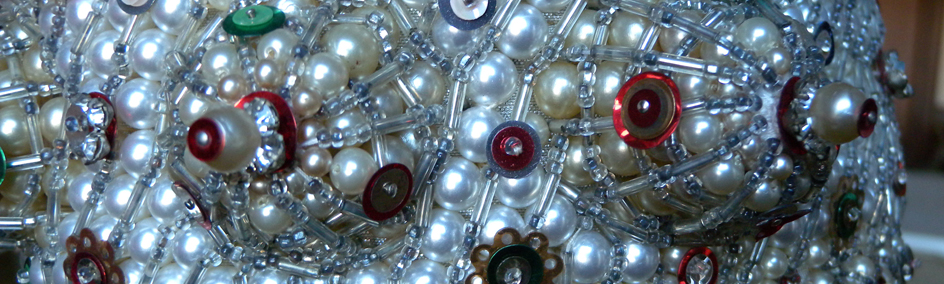
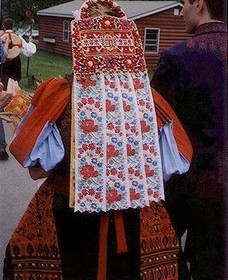
Detail of a hand-beaded Kalotaszeg "párta" — the pearl and sequin headdress worn by unmarried girls.
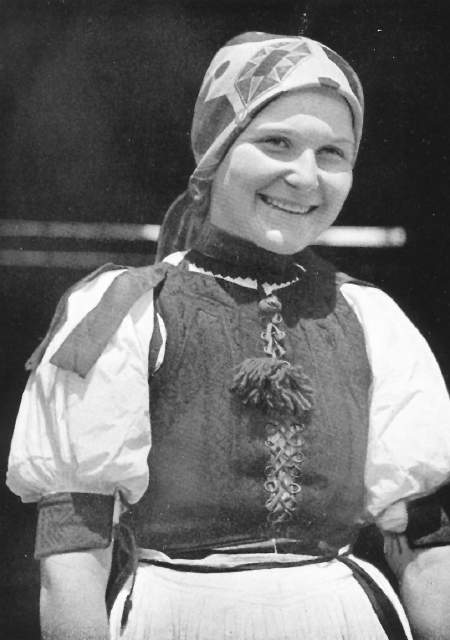
A young woman in the everyday Kalotaszeg headscarf and embroidered bodice.
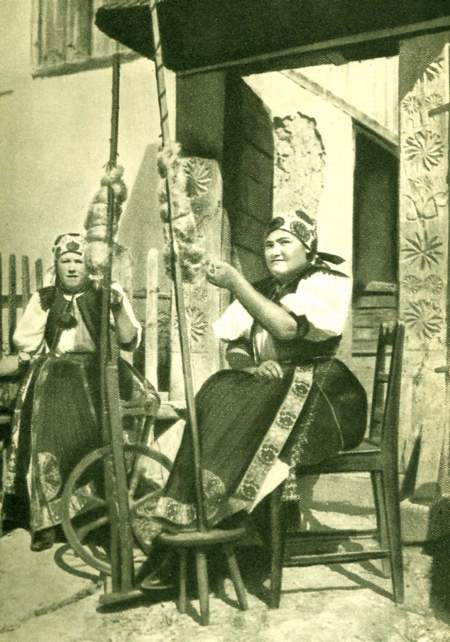
Spinning wool by hand on the porch, in everyday Kalotaszeg dress.
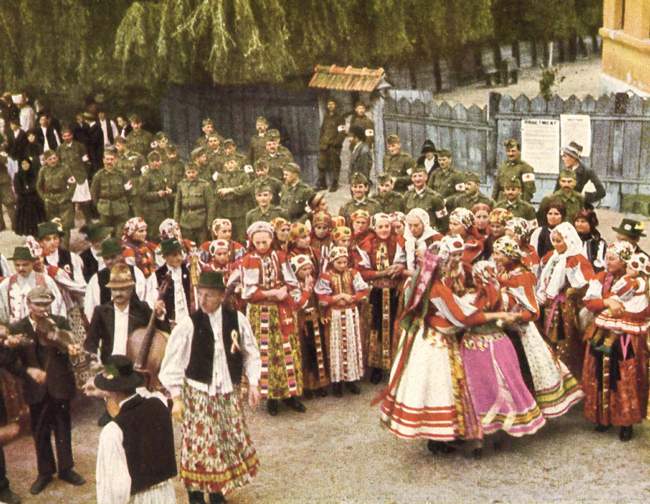
A Kalotaszeg folk dance performed for soldiers, WWI era.
 Mondák
 Vicc
Vicc Költő / Író
 Népdal